
TL;DR
Old concrete steps become dangerous through freeze-thaw spalling, surface polishing, edge crumbling, and algae growth. Making old concrete steps safer requires understanding your options: from temporary fixes like anti-slip tape and grit paint to permanent solutions like FRP or aluminum stair nosings that bolt directly to the concrete. The step edge (nosing) is where most slips start, so solutions targeting that zone deliver the greatest safety return. This glossary covers every term you need to choose the right fix.
This glossary is for homeowners, property managers, facility buyers, and contractors dealing with aging concrete steps that have become a fall hazard. It defines every product type, installation method, and technical concept involved in making those steps safer, so you can compare options and choose the right upgrade for your situation.
The stakes are real. Between 2017 and 2022, fall-related deaths among Canadians aged 65 and older increased 51%, rising from 4,752 to 7,182. A six-country comparative study found that Canada has the highest fall rate at 54.1%, partly attributed to an aging population and adverse weather conditions. Old concrete steps sit at the intersection of these risk factors.
Whether you’re patching a few cracks on your front porch or retrofitting an entire commercial stairway, the terms below will help you understand what’s available and what actually works.
→ Already know what you need? Browse FRP stair nosings or aluminum stair nosings to see sizes, colors, and pricing.
Why Old Concrete Steps Become Dangerous
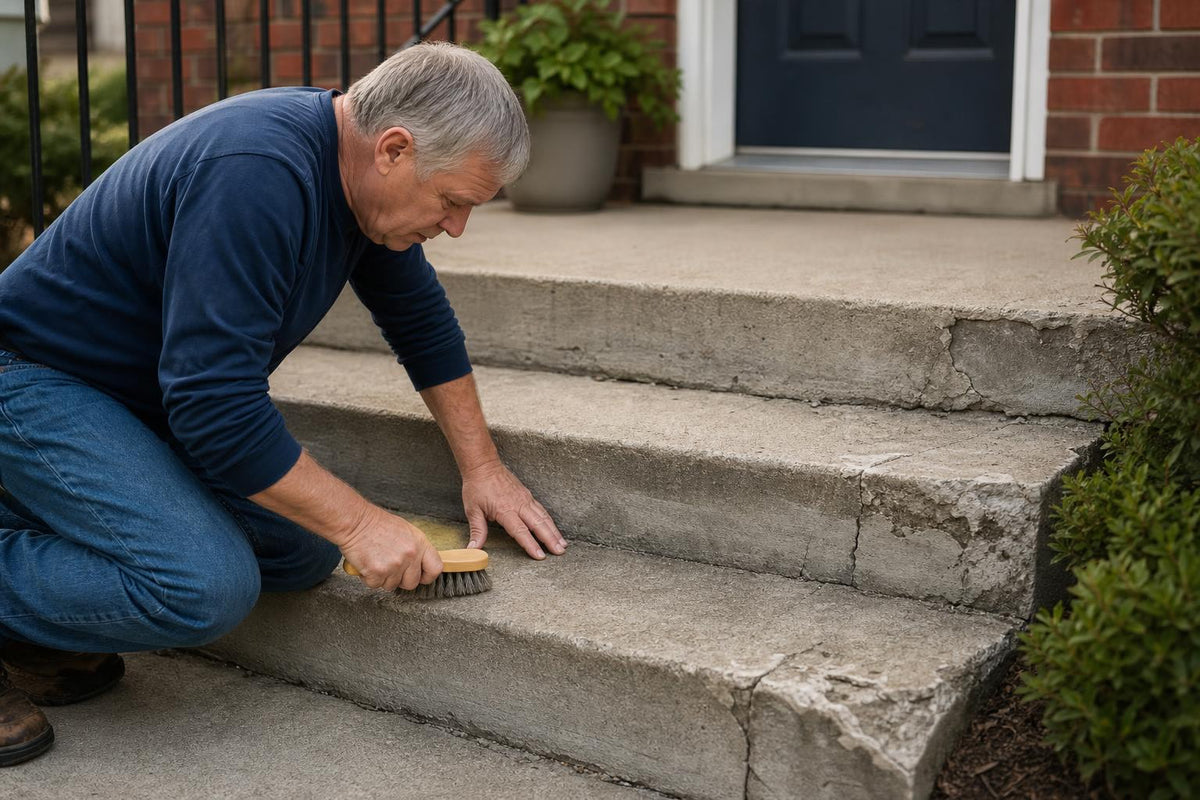
Before getting into solutions, it helps to understand the specific ways concrete steps fail. Each failure mode points toward a different fix.
Surface polishing. Years of foot traffic wear down concrete’s original rough texture, creating a smooth surface that offers little grip, especially when wet.
Freeze-thaw damage. Water seeps into porous concrete, freezes, expands, then thaws. Repeated over hundreds of cycles each Canadian winter, this process cracks the surface and flakes away material. Rain, snow, and freeze-thaw cycles smooth out the surface, reducing grip and creating uneven spots that catch shoe edges.
Edge crumbling (spalling). The front edge of each step takes the most abuse. Concrete lacks the tensile strength to resist the localized loading and wear that happens at step edges. Cracking and crumbling at these edges is a persistent problem, and the resulting uneven surface is a primary trip hazard.
Algae and moisture. Shaded or north-facing steps stay damp longer, encouraging biological growth that creates a slick, nearly invisible layer.
Standing water. Poor drainage or settled concrete pools water on tread surfaces, increasing both slipperiness and long-term deterioration.
When covered with water, ice, or snow, the edge of concrete stair treads becomes especially dangerous. Understanding which of these problems affect your steps determines which solution makes sense.
Glossary: A–Z
A
Abrasive Grit Coating
A layer of hard mineral particles (silicon carbide, aluminum oxide, or carborundum) bonded to a surface with epoxy or resin to create traction. The grit grade determines aggressiveness: coarser grits suit outdoor and industrial stairs, while finer “barefoot” grits work for pool areas or indoor use. Anti-slip paints that contain aluminum oxide or carborundum create a rough, slip-resistant surface even while the grit is encapsulated in the coating.
Found on stair nosings, tread covers, and anti-slip tape. When evaluating products for making old concrete steps safer, grit type and grade are among the most important specifications to check.
Aluminum Stair Nosing
A metal profile fixed to the front edge of a step to provide traction and protect the concrete from further deterioration. Aluminum nosings prevent slips by giving shoes a reliable edge to grip. They resist rust, handle high foot traffic, and won’t degrade under UV exposure or snow. You can even clear them with a snow shovel without damaging the nosing.
Installation typically requires an electric drill and concrete anchor pins. Aluminum is the standard permanent-choice material for both indoor and outdoor stairs. For detailed installation steps, see this guide on installing aluminum stair nosing on outdoor stairs.
Anti-Slip Coating / Grit Paint
A paint or sealer containing embedded grit particles, applied directly to the concrete surface. This is one of the more common approaches people consider when figuring out how to make old concrete steps safer on a budget.
The important caveat: no coating is truly permanent. These are sacrificial layers that wear down over time. Depending on traffic volume, an anti-slip coating may need a refresh layer every few years. It’s also not recommended where heavy shoveling is needed, since aggressive snow removal can scrape off the coating. Practitioners on Reddit report that grit paint works reasonably well for the first season or two but degrades noticeably by the third winter in northern climates.
Anti-Slip Deck Strip
An adhesive-backed strip made of abrasive material, designed to be cut to size and applied to flat or stepped surfaces. Works on concrete, wood, brick, stone, or metal. Available in standard (1000 mm) and long (2400 mm) lengths, and in colors including yellow, black, hazard stripe, and beige. A low-cost, fast-install option for decks, ramps, and steps exposed to rain, snow, or algae.
For installation guidance on these products, the deck strip installation guide covers surface preparation and best practices.
→ Shop anti-slip deck strips for pricing and color options.
Anti-Slip Tape
A self-adhesive roll or strip of abrasive film applied to steps. Tape is often appealing because of speed, simplicity, and lower upfront cost compared to metal nosings. However, unlike composite or metal treads that last for years, tape peels, wears out, and loses grip over time.
On outdoor concrete, adhesion weakens with freeze-thaw and moisture cycling. Standard grip tape often lifts at the edges as temperatures fluctuate. Multiple Reddit users in r/HomeImprovement report anti-slip tape peeling off outdoor concrete within one winter season. Best suited for temporary or indoor use.
B
Broom Finish
A textured surface created by dragging a stiff-bristled broom across wet concrete during pouring. This produces an excellent rough texture that reduces slipperiness on new concrete steps. The catch: it’s only applicable to new pours or full resurfacing. If you’re trying to make old concrete steps safer without tearing them out, a broom finish isn’t an option.
C
Concrete Repair / Patching
The process of fixing crumbled, chipped, or cracked concrete before installing any anti-slip product. Over time, concrete steps develop stains, cracks, and chips, especially on the tread areas that get the most foot traffic. Surface prep typically involves cleaning, pressure washing, and applying a bonding adhesive before filling with patching compound or quick-setting cement.
This is a critical prerequisite. Anti-slip nosings and strips require a structurally sound substrate. Patching alone doesn’t add traction, but skipping it undermines whatever anti-slip product you install afterward.
The most upvoted advice on Reddit’s “cost effective way for weathered concrete stairs” thread follows this sequence: power wash, fill pitting and cracks with repair cement, then apply an anti-slip product. Most homeowners find this tedious, which is part of why many practitioners recommend skipping coatings entirely and going straight to bolt-on nosings.
One interesting forum tip: a user reported using Bondo epoxy automotive body putty for non-structural concrete surface repairs on front steps about 30 years ago, and it still looks great. Not a standard approach, but it speaks to how well epoxy-bonded repairs can hold.
Concrete Sealer with Silica Sand
A two-step DIY method. You apply a concrete sealer, then sprinkle silica sand over the surface while it’s still wet. The sand bonds with the sealer, creating a textured, slip-resistant finish. Adding a second coat of sealer over the sand improves durability.
This approach works for lightly trafficked residential steps in mild climates. Effectiveness degrades outdoors in harsh winters, and heavy foot traffic grinds away the sand texture within a few seasons.
Contrasting Stripe / Visual Contrast Marking
A color-contrasting strip at the leading edge of a step that helps people see where one step ends and the next begins. This contrast plays a critical role in helping individuals with low vision or visual impairments identify the step edge, minimizing the risk of tripping.
Per IBC Section 504.5.1, stair edge marking stripes must be not less than 1 inch wide nor more than 2 inches wide, and the leading 2 inches of the tread must be differentiated with a contrasting color from the rest of the tread. Yellow nosing on grey concrete is the most common high-contrast pairing.
As one Houzz forum user pointed out, very slight changes in elevation of less than two or three steps are often easily overlooked and may cause more stumbling. Visual contrast addresses this directly.
E
Exposed Aggregate
A decorative concrete finish where the top layer is removed to reveal embedded stones, creating a naturally textured, slip-resistant surface. Only achievable during original pouring or full resurfacing. Not a simple retrofit for existing worn steps, but worth understanding if you’re considering a full rebuild.
F
FRP (Fibre-Reinforced Polymer / Fiberglass) Stair Nosing
A pultruded composite nosing made of glass fibre and resin, coated with carbide or mineral grit. FRP nosings are hard-wearing and highly effective in tough environments, with strong resistance to chemicals, corrosion, and rust. They last for years and require virtually no ongoing maintenance.
FRP is lightweight and can be cut on-site with a hacksaw, which means it can be installed in minutes and walked on right away, keeping downtime to a minimum. Available in multiple widths, lengths, and colors including yellow, black, black with yellow nose, and options with a glow strip.
FRP is one of the most underrepresented solutions in existing online guides about how to make old concrete steps safer, yet it’s arguably the best fit for Canadian outdoor conditions. For help choosing the right dimensions, see this guide to sizing stair nosings for retrofit applications.
Freeze-Thaw Cycle
The repeated freezing and thawing of water absorbed into porous concrete. This is the primary cause of spalling (flaking) and edge crumbling on outdoor concrete steps in Canadian climates. Freeze-thaw damage creates uneven surfaces that increase trip risk and degrade the bond of adhesive-based anti-slip products. Any plan to make old concrete steps safer in Canada must account for freeze-thaw performance, or the solution will fail within a few winters.
G
Glow-in-the-Dark (Photoluminescent) Nosing
A stair nosing with an embedded strip that absorbs light and glows in darkness. Many anti-slip stair nosings come with a photoluminescent strip that aids step-edge visibility in low-light conditions. These glowing stair edges provide additional safety during power outages or in dimly lit areas.
Critical for egress stairwells in commercial buildings and for outdoor residential steps used at night. FRP nosings are available with a glow strip option.
→ See glow-in-the-dark strips for pricing and specifications.
H
Handrail / Railing
A graspable rail mounted alongside steps to provide balance and support. Installing an iron or steel railing on concrete steps significantly improves safety, particularly for families with young children or elderly members. Building codes specify minimum height and spacing requirements.
A handrail complements but does not replace surface traction improvements. When figuring out how to make old concrete steps safer, many people focus solely on railings and overlook the step surface itself. Both matter.
M
Mechanical Fastening
Securing anti-slip products to concrete using screws, anchors, or bolts rather than adhesive alone. For exterior stairs exposed to rain, snow, and freeze-thaw cycles, mechanical fasteners are essential. Options include pre-drilled holes for screws or construction adhesive combined with pins.
Mechanical fixing is strongly preferred for outdoor concrete because adhesive bonds weaken with moisture and temperature cycling. A practitioner warning from GripFactory Australia confirms that adhesion to existing coatings is generally poor unless the surface is mechanically abraded. It’s usually more effective to remove the old coating or use a GRP nosing that can be mechanically fixed over the top.
N
Nosing (Stair Nosing)
The front edge of a step tread, or the protective strip retrofitted to that edge. The nosing is the horizontal, protruding edge where most foot traffic occurs. It’s also where most slips start. The edge of the step gets the highest foot traffic, making it a quickly worn, high-risk section of any stairway.
Anti-slip nosings can be FRP, aluminum, or steel, and attach to existing concrete via screws, anchors, or adhesive. This is the single most important term in this glossary. If you only address one part of the step, address the nosing. Learn more about how stair nosings reduce slip incidents and why they’re the first line of defense.
P
Pultrusion
A manufacturing method for FRP products in which continuous glass fibres are pulled through a resin bath and shaped through a heated die. This creates a uniform, dense profile that resists delamination. Pultruded FRP nosings offer superior chemical resistance and structural consistency compared to hand-laid fiberglass. If you see “pultruded” on a product spec, it indicates a higher-quality manufacturing process.
R
Rubber Stair Tread
A mat-like rubber covering placed on the full tread surface. Rubber treads affixed with adhesive caulk do not offer a long-lasting solution and may further damage concrete steps when removed. There’s no maintenance that can extend their life. Expect rubber or doormat-style treads to last only 2 to 3 years.
Not recommended as a permanent outdoor solution. Adhesive fails in freeze-thaw conditions, and rubber collects dirt, which actually reduces traction over time. Because they only last a few years and aren’t manufactured as lifetime solutions, rubber tread replacements end up costing more than a one-time investment in permanent nosings.
Rubberized Coating
A thick, flexible coating applied to concrete for slight cushioning and improved traction. These coatings add cushioning and reduce both fall impact and slip risk. However, they need reapplication every few years and don’t solve structural edge deterioration. Think of rubberized coatings as a stopgap rather than a permanent answer to making old concrete steps safer.
S
Saddle Clamp Assembly
A stainless-steel mounting bracket used to attach FRP or GRP nosings to open-mesh (grated) stairs or other surfaces where standard screw-down installation isn’t possible. Stainless saddle clamp assemblies are available as an installation accessory.
Spalling
The flaking or peeling of concrete surface layers, typically caused by freeze-thaw cycles, salt exposure, or impact. Rebar helps absorb overall structural loading, but it does nothing to combat the routine localized wear on surfaces and edges. Spalled step edges are a primary fall hazard. FRP or aluminum nosings can stabilize spalled edges while simultaneously adding traction, solving two problems with one product.
Stair Tread Cover
A full-width non-slip panel that covers the entire tread surface (top of the step), as opposed to a nosing that covers only the front edge. Available in FRP, aluminum, and composite materials. Tread covers suit badly deteriorated steps where the entire walking surface is compromised, not just the edge.
If your steps are far gone, with pitting across the whole tread and crumbling edges, a full aluminum stair tread cover is often a better investment than a nosing alone.
T
Tactile Walking Surface Indicator (TWSI)
A textured ground-surface panel (truncated domes or directional bars) installed at transitions such as curb ramps, transit platforms, and building entries to alert people with visual impairments to elevation changes. Not typically installed on residential concrete steps, but relevant at the top and bottom landings of commercial and institutional stairways for accessibility compliance. Surface-applied and cast-in-place tactile indicator options are available for different installation scenarios.
V
Visual Contrast
The measurable difference in lightness between a nosing or marking and the surrounding step tread. The IBC requires that the leading 2 inches of the tread be differentiated with a contrasting color, either a dark edge on a light-colored tread or a light-colored edge on a darker tread. This is meant to help visually impaired people and improve general safety for everyone.
Visual contrast is a safety feature, not just an aesthetic choice. A yellow nosing on grey concrete is the most common compliant pairing. For commercial and institutional stairways, this is often a code requirement, not optional.
Quick-Reference Comparison Table
| Solution | Best For | Durability | Installation | Winter Performance | Relative Cost |
|---|---|---|---|---|---|
| FRP Stair Nosing | Residential and commercial | Permanent | Screw-down / anchors | Strong | Medium |
| Aluminum Stair Nosing | Residential and commercial | Permanent | Screw-down / anchors | Strong | Medium–High |
| Stair Tread Cover | Badly deteriorated steps | Permanent | Screw-down | Strong | High |
| Anti-Slip Deck Strip | Decks, ramps, light-traffic steps | Semi-permanent | Adhesive | Moderate | Low |
| Anti-Slip Tape | Indoor or temporary outdoor | Temporary (1–2 seasons outdoors) | Peel-and-stick | Poor | Low |
| Grit Paint / Anti-Slip Coating | Light-traffic residential | Semi-permanent (refresh every 2–4 years) | Brush or roller | Moderate | Low |
| Concrete Sealer + Silica Sand | Light-traffic, mild climate | Semi-permanent | Brush + sprinkle | Poor–Moderate | Low |
| Rubber Stair Tread | Indoor only | Temporary (2–3 years) | Adhesive | Poor | Low |
| Rubberized Coating | Residential, light commercial | Semi-permanent (refresh every 2–3 years) | Brush or roller | Moderate | Low–Medium |
| Handrail / Railing | All stairs (complements surface fixes) | Permanent | Bolted to concrete | N/A (balance aid) | Medium–High |
When to Repair Concrete vs. When to Retrofit with Nosings
The decision comes down to what’s actually wrong with your steps.
Repair is enough when:
- Cracks are cosmetic and shallow (hairline cracks, minor surface pitting)
- The step edges are still intact and roughly level
- The surface just needs re-texturing, not structural restoration
Retrofit with nosings or tread covers when:
- Step edges are crumbling or spalled
- The surface has been polished smooth by years of foot traffic
- You need a solution that lasts through Canadian winters without reapplication
- The steps serve a commercial or high-traffic function
The key insight: if edges are crumbling, a nosing both adds traction and stabilizes the damaged edge. Patching the edge restores shape but adds no grip. A nosing does both jobs at once.
Several Reddit users in home improvement communities recommend skipping coatings entirely for outdoor Canadian conditions and going straight to bolt-on aluminum or FRP nosings. The logic is sound. A permanent mechanical fix eliminates the cycle of reapplying temporary solutions every couple of years.
For step-by-step guidance on retrofitting without a full rebuild, see how to retrofit stairs without rebuilding them.
Temporary vs. Permanent Solutions: The Real Cost
The cheapest option upfront is rarely the cheapest option over five years. Here’s how the math works:
- Rubber treads last 2 to 3 years and need full replacement each time.
- Anti-slip tape often fails within one outdoor winter season.
- Grit paint needs a refresh coat every 2 to 4 years depending on traffic.
- FRP nosings are corrosion-proof, chemical-resistant, and virtually maintenance-free for years.
- Aluminum nosings carry lifetime residential warranties from major brands.
As one product comparison site put it: because rubber or doormat-style treads only last a few years and aren’t manufactured as lifetime solutions, they end up costing more than the initial investment in a permanent fix. When you factor in repeated purchases, repeated installation labor, and the ongoing fall risk during the gap between failures and replacements, permanent nosings are the more economical choice.
Understanding the Limits of Any Anti-Slip Product
No product eliminates all slip risk. Anti-slip nosings, coatings, and strips reduce the likelihood of falls, but they work within limits.
- Surfaces still need regular cleaning and maintenance.
- Ice, oil, and debris still need to be managed. A nosing won’t help if it’s buried under sheet ice.
- Code and accessibility claims vary by jurisdiction. Always verify requirements against your specific project location and applicable building code.
- Adhesive products perform differently on different substrates and in different climates. What works in Vancouver may fail in Winnipeg.
The goal is risk reduction, not risk elimination. Making old concrete steps safer is about stacking multiple improvements: good drainage, proper lighting, handrails, visual contrast, and surface traction working together.
Frequently Asked Questions
What is the fastest way to make old concrete steps safer?
For same-day improvement, adhesive anti-slip deck strips or tape provide immediate traction without tools. For a lasting fix, bolt-on FRP or aluminum nosings can be installed in under an hour per staircase with a drill and concrete anchors.
Do anti-slip coatings work on outdoor concrete in Canada?
They provide moderate traction improvement, but they degrade faster in freeze-thaw climates. Expect to reapply every 2 to 4 years. Aggressive snow shoveling also scrapes off the coating. For Canadian winters, mechanically fastened nosings outperform coatings.
Can I install stair nosings over crumbling concrete edges?
Yes, and this is one of the strongest arguments for nosings. A nosing both adds traction and physically stabilizes the deteriorating edge, preventing further crumbling. However, severely damaged concrete should be patched first to ensure a solid mounting surface for the screws or anchors.
What color nosing should I choose for grey concrete steps?
Yellow provides the highest visual contrast against grey concrete and meets building code requirements for step-edge marking. Black nosings are more discreet for residential use but offer less visibility in low light. Nosings with a photoluminescent glow strip add nighttime visibility regardless of color.
Is a handrail enough to make old concrete steps safer?
A handrail provides balance support, which is important, but it doesn’t address the slippery or crumbling surface itself. The most effective approach combines a handrail with surface traction improvements like nosings or tread covers.
How do I choose between FRP and aluminum nosings for concrete steps?
Both are permanent, weather-resistant, and mechanically fastened. FRP is lighter, easier to cut on site, and resists chemicals. Aluminum offers a more traditional metal appearance and is extremely durable under heavy foot traffic. For a detailed comparison, read FRP vs. aluminum stair nosings for different environments.
How long do rubber stair treads last on outdoor concrete?
Expect 2 to 3 years at best. Adhesive fails in freeze-thaw conditions, rubber collects dirt that reduces traction, and there’s no way to maintain or extend their life. They are not a cost-effective long-term solution for outdoor use.
Choose the Right Product for Your Concrete Steps
If you’re ready to stop patching temporary fixes every couple of years, permanent nosings and tread covers are the path forward. Safety Step Canada ships orders the next business day and carries FRP and aluminum options in multiple sizes and colors.
→ Contact Safety Step Canada for help choosing the right product for your steps, or visit the residential solutions page to see which products fit your project.