
TL;DR
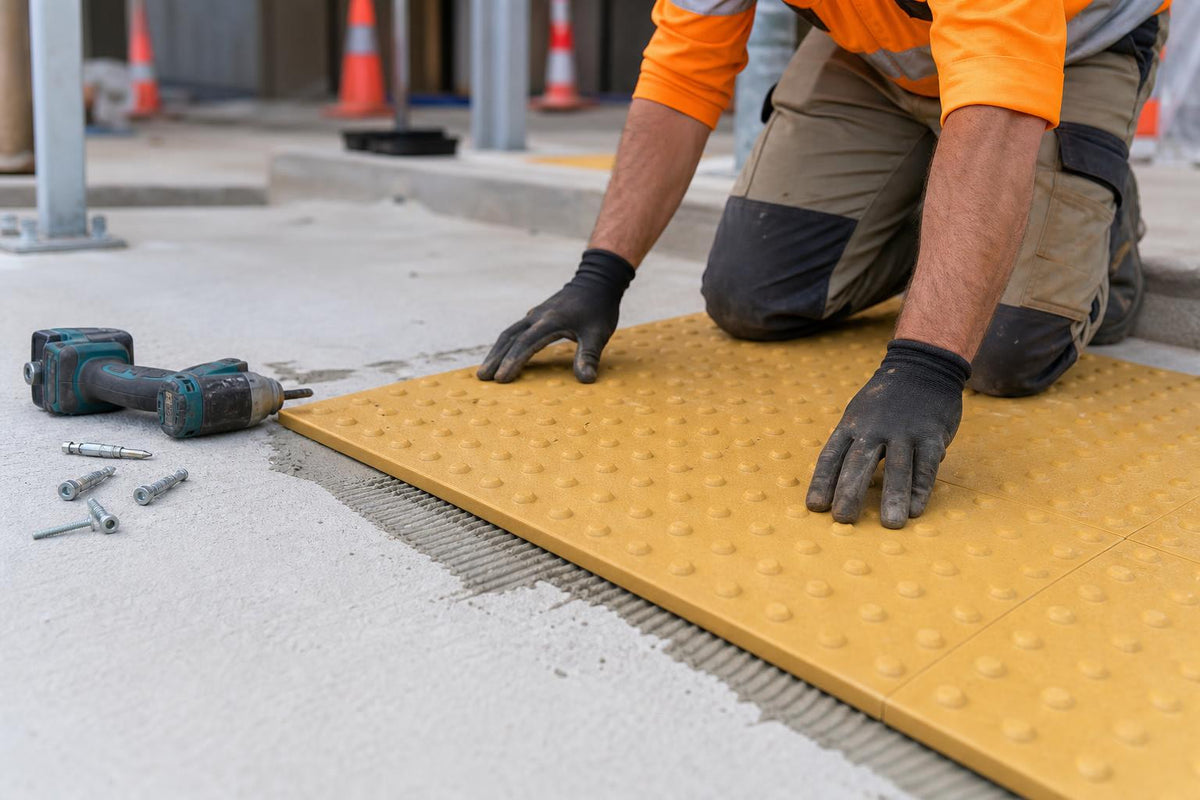
Tactile panels on concrete are secured using three approaches: adhesive fixing (epoxy bonded to the slab), mechanical fixing (anchors or screws drilled into the concrete), or both methods combined. For surface-applied panels on cured concrete, the dual-method approach (adhesive plus mechanical fasteners) is the industry standard. Cast-in-place installation works best for new pours. In Canadian climates, adhesive-only installations fail frequently due to freeze-thaw cycling, so mechanical or dual-method fixing is strongly preferred for exterior work.
This glossary-style guide is for contractors, specifiers, facility managers, and procurement officers who need to understand the adhesive and mechanical fixing methods for tactile panels on concrete. Whether you’re retrofitting tactile walking surface indicators (TWSIs) onto an existing sidewalk or specifying installation for a new concrete pour, the method you choose determines how long those panels stay in place, how well they meet code, and how they hold up through Canadian winters.
Browse tactile indicator panels to see surface-applied and cast-in-place options available for Canadian projects.
Adhesive Fixing
Definition: Adhesive fixing means bonding a tactile panel directly to a concrete surface using a chemical agent, most commonly a two-part structural epoxy.
Common Adhesive Types
Two-part epoxy is the standard for tactile panel installation. It consists of a resin and a hardener mixed immediately before application. Once cured, it creates a rigid bond between the panel and the concrete substrate. Some formulations are moisture-tolerant, allowing installation on slightly damp surfaces, though a dry substrate always produces a stronger bond.
Polyurethane construction adhesive is occasionally used for lighter-duty applications. It offers flexibility but lower shear strength than epoxy. It is not the preferred choice for exterior, high-traffic tactile installations.
Solvent-free epoxy formulations are increasingly specified for indoor projects where ventilation is limited and VOC restrictions apply.
When Adhesive Fixing Is Used
Adhesive fixing for tactile panels on concrete is most common in retrofit scenarios where minimal substrate disruption matters, on smooth and well-prepared concrete surfaces, and as a supplementary bond used alongside mechanical anchors (more on this below). It is rarely used alone for permanent outdoor installations. Practitioners on installation forums consistently warn that adhesive-only outdoor bonds fail within months due to moisture ingress beneath the panel edges.
Key Limitation
Epoxy adhesives require a minimum application temperature of about 10°C. Below that threshold, the chemical reaction slows dramatically, and the bond may never reach full strength. This is a critical consideration for any Canadian project scheduled between late fall and early spring.
Mechanical Fixing
Definition: Mechanical fixing secures a tactile panel to concrete using physical fasteners (anchors, screws, bolts, or pins) that are drilled and set into the slab. It provides the most durable and tamper-resistant attachment, which is why it is the preferred method for high-traffic areas and outdoor installations.
Subtypes of Mechanical Fixing
Drill-and-plug is the most common mechanical method. The installer drills holes into the concrete (typically 6 to 6.5 mm masonry bit, 50 to 80 mm deep), inserts nylon expansion plugs, then drives a nail or pin through the panel’s pre-formed holes into each plug. Colour-matched sleeves cover the fastener heads to maintain the panel’s visual contrast.
Tek anchors (self-drilling anchors) drill and fasten in a single step. They save time but offer less pull-out resistance than expansion plugs in dense concrete.
Concrete screws (Tapcon-style) thread directly into a drilled pilot hole. They work well for moderate-traffic interior applications.
Epoxy-set studs are individual tactile indicators bonded into drilled holes with structural epoxy, combining chemical and mechanical principles. This method is common for discrete stud-by-stud installations rather than full panel mounting.
For projects requiring stainless steel saddle clamp assemblies or other fastening accessories, mechanical fixing provides the framework for secure attachment.
Concrete Requirements for Mechanical Fixing
The concrete must be at least seven days cured before drilling. Drilling into green (uncured) concrete, especially exposed-aggregate mixes, risks large chunks breaking out around the hole. Several experienced installers on practitioner forums note that waiting several weeks is even better, particularly for adhesive and mechanical fixing methods for tactile panels on concrete where both bond strength and anchor holding power matter.
A rotary hammer drill is the standard tool. Diamond core water drilling is an alternative for sensitive substrates, though it takes significantly longer and should be factored into scheduling and labor estimates.
Dual-Method Fixing (Adhesive + Mechanical)
Definition: Dual-method fixing combines structural adhesive on the panel back with mechanical anchors through pre-formed holes. This is the industry standard for surface-applied tactile panels on concrete, and it is the single most important concept that many installation guides fail to explain clearly.
Why Both Methods Together
Adhesive provides a continuous surface bond that seals out moisture and distributes load across the entire panel. Mechanical anchors provide pull-out resistance, shear resistance, and tamper-proofing. Together, they exceed what either method achieves alone. Manufacturer installation instructions from major TWSI suppliers confirm this: surface-applied panels are shipped with both adhesive and anchoring hardware because dual-method installation is the expected workflow.
The Standard Dual-Method Workflow
- Mark the panel location on the concrete.
- Scour the concrete within the marked area using a 4-inch diamond cup grinder.
- Vacuum all dust, then wipe with acetone or a compatible solvent.
- Apply structural epoxy to the back of the panel.
- Set the panel in position and step on it to maintain pressure.
- Drill through the panel’s pre-formed holes into the concrete.
- Insert anchors or drive stainless steel pins.
- Allow the epoxy to cure fully before opening to foot traffic.
This approach to adhesive and mechanical fixing methods for tactile panels on concrete is standard for FRP panels, composite panels, and surface-applied truncated dome tiles across Canadian projects.
When Dual-Method Fixing Applies
Dual-method fixing is recommended for virtually every surface-applied exterior installation. It is particularly important for transit platforms, curb ramps, building entrances, and any location exposed to snow removal equipment, freeze-thaw cycling, or heavy pedestrian traffic. Review the TWSI procurement checklist before specifying an installation method.
Cast-in-Place Installation
Definition: Cast-in-place installation embeds tactile panels into freshly poured concrete during the initial pour, creating a flush, permanent, and tamper-resistant surface.
How It Works
A template or the panel itself is set into the wet concrete after it has been screeded but before final finishing. Excess concrete (mud) is removed from around the truncated domes or directional bars, and the panel is tamped flush with a rubber mallet. The concrete then cures around the panel’s anchoring features, locking it permanently.
Critical Requirements
Concrete slump must be controlled between 4 and 7 inches. If the mix is too wet, the panel sinks below the surface. If it’s too dry, the anchors won’t set properly. CSA B651 requires the panel’s base surface to sit level with the surrounding concrete, or not more than 3 mm above or below it.
When Cast-in-Place Is the Right Choice
New construction, major sidewalk rehabilitation, and municipal curb ramp programs are the primary use cases. Cast-in-place produces the most durable result because there is no bond line between panel and substrate that can delaminate. The City of Toronto conducted a year-long pilot project evaluating four different TWSI products at the intersection of Shuter Street and Victoria Street between November 2012 and July 2013. The result: cast iron was recommended as the city’s standard, largely because plastic panels cracked under snowplow impact while cast iron showed no wear, peeling, or cracking.
Cast iron TWSI plates and heritage brick cast-in-place panels are designed specifically for this installation method.
Peel-and-Stick (Self-Adhesive) Fixing
Definition: Peel-and-stick fixing uses factory-applied adhesive backing (typically butyl-based tape) to press tactile tiles or studs onto a prepared surface without drilling.
Best For
Temporary installations, heritage or listed buildings where drilling is prohibited, and indoor low-traffic applications where permanent anchoring is unnecessary.
Key Limitation
Self-adhesive tactile indicators are the most vulnerable to failure outdoors. Moisture penetrates around and under the pads, breaking the adhesive bond. Temperature cycling accelerates this process. Practitioner guidance from multiple installation specialists is blunt: peel-and-stick tiles can be removed with little effort, and they should only be used when drilling is genuinely impossible. For any permanent outdoor application on concrete, adhesive and mechanical fixing methods for tactile panels on concrete will always outperform a peel-and-stick approach.
Surface Preparation for Concrete
Definition: Surface preparation is the cleaning, profiling, and priming sequence that concrete requires before any fixing method can achieve a reliable bond. A majority of tactile panel failures trace back to poor substrate preparation, not the adhesive or anchor itself.
Standard Preparation Steps
- Remove loose material. Scrape off paint, coatings, curing compounds, or any flaking surface.
- Diamond-grind or scour. Use a 4-inch diamond cup grinder to create a roughened profile within the panel footprint. This step dramatically improves adhesive grip.
- Vacuum dust. All grinding residue must be removed completely.
- Solvent wipe. Clean with acetone or an approved solvent to remove oils and grease.
- Verify cure time. The concrete should be at least seven days cured. For adhesive-heavy methods, several weeks is better. Green concrete releases moisture that undermines epoxy bonds and can cause panels to lift off entirely.
- Check temperature. Ambient and substrate temperatures must be above 10°C for epoxy adhesives to cure properly.
One practitioner tip from TacPro installation guides: always lift a corner of the drilling template after the first few holes to check that the concrete isn’t chipping or cracking. If damage is occurring, switch to diamond core water drilling. These details matter because the substrate condition directly determines the success of adhesive and mechanical fixing methods for tactile panels on concrete.
For related guidance on preparing concrete and other substrates, see surface preparation for anti-slip strips.
Choosing the Right Fixing Method
The right method depends on whether the concrete is new or existing, whether the installation is indoor or outdoor, and how much traffic and weather exposure the panels will face.
| Scenario | Recommended Method |
|---|---|
| New concrete pour (sidewalk, curb ramp) | Cast-in-place |
| Retrofit on cured concrete, exterior, high traffic | Dual-method (adhesive + mechanical) |
| Retrofit on cured concrete, interior, moderate traffic | Mechanical fixing or dual-method |
| Temporary installation or no-drill restriction | Peel-and-stick (with primer) |
| Canadian winter exposure, any scenario | Dual-method or cast-in-place; avoid adhesive-only |
| Transit platform or railway station | Dual-method with stainless steel fasteners |
A common mistake, according to experienced installers, is using the same adhesive or fixing method for every surface. Tactile indicators installed on asphalt require different preparation than those on cured concrete or timber. Always match the method to the substrate.
For transit-specific guidance, the article on recommended tactile panel sizes for transit platforms covers sizing alongside installation considerations.
Canadian Standards and Cold-Weather Considerations
CSA B651 and ISO 23599
CSA B651:23 (now in its sixth edition) governs the design, placement, and maintenance of tactile walking surface indicators in Canada. The standard requires that TWSIs sit within ±3 mm of the surrounding surface, provide adequate slip resistance, and offer luminance contrast with the surrounding surface. CSA B651 is aligned with ISO 23599, meaning products meeting one standard generally satisfy the other.
The National Building Code of Canada references CSA B651 for TWSI specifications, and Ontario’s AODA requires TWSIs at new and redeveloped pedestrian crossings. For a deeper look at compliance obligations, read the TWSI compliance guide for Canadian specifiers.
Why Cold Weather Changes the Equation
Canadian winters are uniquely punishing for adhesive and mechanical fixing methods for tactile panels on concrete. Three factors stand out:
Adhesive curing failure. Cold temperatures change the physical properties of epoxy adhesives. Below 10°C, the adhesive may not apply properly or, once applied, may never reach its rated bond strength. Scheduling installations for warmer months or using heated enclosures is standard practice for Canadian contractors.
Freeze-thaw cycling. Water that penetrates beneath a panel’s edges freezes, expands, and pries the bond apart. Over repeated cycles, even a well-applied adhesive-only bond deteriorates. Dual-method fixing resists this because the mechanical anchors hold even when the adhesive degrades.
Snowplow impact. Pedestrians with vision loss rely on TWSIs to be intact and detectable year-round. The City of Toronto’s pilot project found that plastic panels cracked under snowplow impact, while cast iron panels remained undamaged through a full winter. For extreme climates, leaving a 3/16-inch gap between panel joints and sealing with an elastomeric sealant conforming to ASTM C920 helps accommodate thermal expansion.
Installation Cost and Labor Context
The City of Toronto pilot project documented that installation of tactile walking surface indicators took approximately 2 person-hours across all product types tested. At an estimated labor rate of $48 per hour, total installation labor cost was $96 per location. Material costs vary significantly by panel type, size, and fixing method, but labor differences between adhesive, mechanical, and dual-method approaches are modest. The real cost difference shows up over the panel’s lifespan: cheap peel-and-stick installations that fail within a year cost far more to replace than a properly executed dual-method installation that lasts decades.
What These Methods Cannot Do
Fixing methods reduce the risk of panel displacement, but they do not eliminate all maintenance requirements. Panels still need periodic inspection, especially after harsh winters. Concrete surfaces around panels still need cleaning to maintain the luminance contrast that makes TWSIs detectable. Code and accessibility claims should always be verified against the specific standards applicable to your project location, as requirements vary between provinces and municipalities.
No adhesive or anchor compensates for a poorly prepared substrate. If the concrete is crumbling, contaminated with oil, or insufficiently cured, even the best dual-method installation will eventually fail.
Next Steps
If you’re specifying or installing tactile panels on concrete for a Canadian project, choosing between adhesive and mechanical fixing methods for tactile panels on concrete starts with understanding your substrate condition, traffic levels, and climate exposure.
Contact Safety Step Canada for help selecting the right installation approach for your project.
Frequently Asked Questions
Can I use adhesive alone to install tactile panels on outdoor concrete?
Adhesive-only installations are not recommended for permanent outdoor use. Moisture ingress and freeze-thaw cycling break the bond over time. Dual-method fixing (adhesive plus mechanical anchors) is the standard for exterior concrete installations.
How long must concrete cure before I can install tactile panels?
A minimum of seven days is required before drilling. For adhesive methods, waiting several weeks is better because residual moisture in green concrete weakens the epoxy bond and can cause panels to lift off completely.
What is the minimum temperature for installing tactile panels with epoxy?
Most two-part epoxy adhesives require substrate and ambient temperatures above 10°C. Below this threshold, the adhesive may not cure properly. Plan installations accordingly, especially for Canadian fall and spring schedules.
Do I need both adhesive and screws for surface-applied panels?
Yes, for most surface-applied installations on concrete. The adhesive seals out moisture and distributes load, while the mechanical fasteners provide pull-out and shear resistance. Major manufacturers ship both adhesive and anchoring hardware with their panels because dual-method installation is the expected approach.
What tools are needed to install tactile panels on concrete?
Standard tools include a rotary hammer drill, a 4-inch diamond cup grinder (for scouring the concrete), a vacuum, acetone for solvent wiping, a rubber mallet (for cast-in-place), and the appropriate drill bits and anchors for your chosen fastener type.
Which tactile panel material performs best in Canadian winters?
The City of Toronto’s pilot project found that cast iron panels outperformed plastic alternatives through a full winter of snowplow exposure. Cast iron does not wear, peel, or crack under mechanical impact. FRP and composite panels with dual-method fixing also perform well when properly installed.
Does CSA B651 specify the installation method?
CSA B651:23 specifies performance requirements (flush within ±3 mm of surrounding surface, slip resistance, luminance contrast) rather than prescribing a single installation method. The contractor or specifier chooses between adhesive and mechanical fixing methods for tactile panels on concrete based on project conditions, as long as the finished installation meets the standard’s performance criteria.
Where can I find more information on TWSI compliance in Canada?
The AODA tactile requirements guide and the tactile indicators compliance guide for Canada cover provincial and federal obligations in detail.